
Loading
Discover how artificial intelligence is transforming business operations and creating new opportunities for growth.
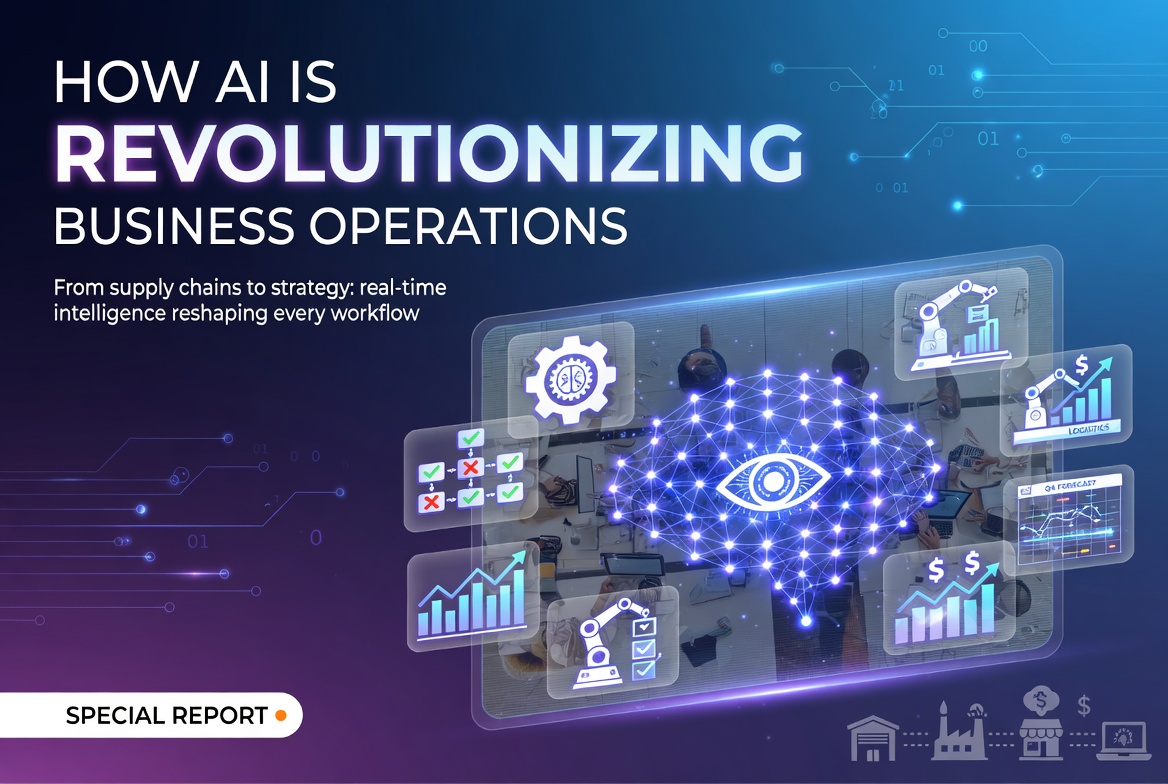
Artificial Intelligence (AI) is reshaping the business landscape, driving efficiency, innovation, and growth like never before. From automating repetitive tasks to providing deep insights through data analysis, AI is revolutionizing how businesses operate in the digital age. This article explores the transformative impact of AI on business operations, offering an SEO-friendly and reader-focused guide to its benefits, applications, and future potential.
AI refers to technologies that mimic human intelligence, such as machine learning, natural language processing, and computer vision. In business operations, AI enables companies to streamline processes, make data-driven decisions, and enhance customer experiences. By leveraging AI, businesses can stay competitive in a fast-evolving market.
AI-powered automation is eliminating time-consuming manual tasks, allowing employees to focus on strategic work. Tools like robotic process automation (RPA) handle repetitive processes such as data entry, invoice processing, and inventory management with unmatched speed and accuracy.
Benefits:
Reduces human error
Saves time and labor costs
Increases productivity
Example: AI chatbots handle customer inquiries 24/7, freeing up support teams to tackle complex issues.
AI analyzes vast amounts of data to uncover patterns and insights that humans might miss. Machine learning algorithms can predict trends, optimize supply chains, and identify market opportunities, enabling smarter decision-making.
Benefits:
Accurate forecasting
Real-time analytics
Improved risk management
Example: Retailers use AI to analyze customer purchasing behavior, optimizing stock levels and marketing campaigns.
AI enables businesses to deliver tailored experiences at scale. By analyzing customer data, AI tools create personalized recommendations, targeted marketing, and customized services that boost engagement and loyalty.
Benefits:
Higher customer satisfaction
Increased conversion rates
Stronger brand loyalty
Example: E-commerce platforms like Amazon use AI to recommend products based on browsing and purchase history.
AI streamlines supply chain operations by predicting demand, optimizing routes, and managing inventory. Machine learning models analyze variables like weather, traffic, and market trends to ensure efficient operations.
Benefits:
Reduced operational costs
Faster delivery times
Minimized waste
Example: Logistics companies use AI to optimize delivery routes, cutting fuel costs and improving delivery speed.
AI enhances cybersecurity by detecting threats and vulnerabilities in real time. Machine learning algorithms identify unusual patterns, prevent fraud, and protect sensitive data, ensuring businesses stay secure in a digital world.
Benefits:
Proactive threat detection
Reduced risk of data breaches
Enhanced compliance
Example: Financial institutions use AI to detect fraudulent transactions by analyzing spending patterns instantly.
AI is revolutionizing human resources by automating recruitment, analyzing candidate fit, and enhancing employee engagement. Tools like AI-driven applicant tracking systems (ATS) screen resumes and match candidates to job requirements.
Benefits:
Faster hiring processes
Improved employee retention
Data-driven talent strategies
Example: AI tools like LinkedIn’s Talent Insights analyze workforce trends to guide hiring decisions.
AI is no longer a futuristic concept—it’s a necessity for staying competitive. Here’s why businesses should embrace AI:
Efficiency: Automates routine tasks, saving time and resources.
Scalability: Handles growing data and customer demands effortlessly.
Innovation: Unlocks new opportunities through predictive analytics and insights.
Customer-Centricity: Delivers personalized experiences that build trust and loyalty.
While AI offers immense potential, businesses must navigate challenges like:
High Initial Costs: Implementing AI requires investment in technology and training.
Data Privacy Concerns: Ensuring compliance with regulations like GDPR is critical.
Skill Gaps: Teams may need upskilling to work with AI tools effectively.
Solution: Partner with AI experts or agencies to develop tailored strategies and ensure smooth integration.
Identify Pain Points: Pinpoint areas where AI can add value, such as customer service or inventory management.
Start Small: Pilot AI tools in one department before scaling.
Choose the Right Tools: Select AI solutions that align with your goals, such as CRM platforms or analytics software.
Train Your Team: Equip employees with the skills to leverage AI effectively.
Monitor and Optimize: Continuously track AI performance and refine strategies.
The future of AI is bright, with advancements in generative AI, predictive analytics, and automation poised to further transform operations. Businesses that adopt AI early will gain a competitive edge, while those that lag risk falling behind.
Trends to Watch:
Generative AI: Tools like content generators will streamline marketing and creative processes.
AI-Driven Sustainability: AI will optimize energy use and reduce waste in operations.
Hyper-Personalization: AI will deliver even more tailored customer experiences.
AI is revolutionizing business operations by driving efficiency, enhancing decision-making, and creating personalized customer experiences. By embracing AI strategically, businesses can unlock new levels of productivity and innovation. At Thorium Agency, we help businesses harness AI to transform their operations and thrive in the digital age. Ready to revolutionize your business with AI? Contact us today to explore tailored solutions for your needs.
Keywords: AI in business, artificial intelligence operations, business automation, AI-driven growth, personalized customer experiences, AI for supply chain, cybersecurity AI, HR automation.
More from Thorium
Learn how to create a memorable brand identity that resonates with your audience and stands out from the competition.
Protect your business with these essential cybersecurity practices that every small business should implement.

Everything you need to know about creating exceptional user experiences that convert visitors into customers.